
Tools to discover, explore, and communicate
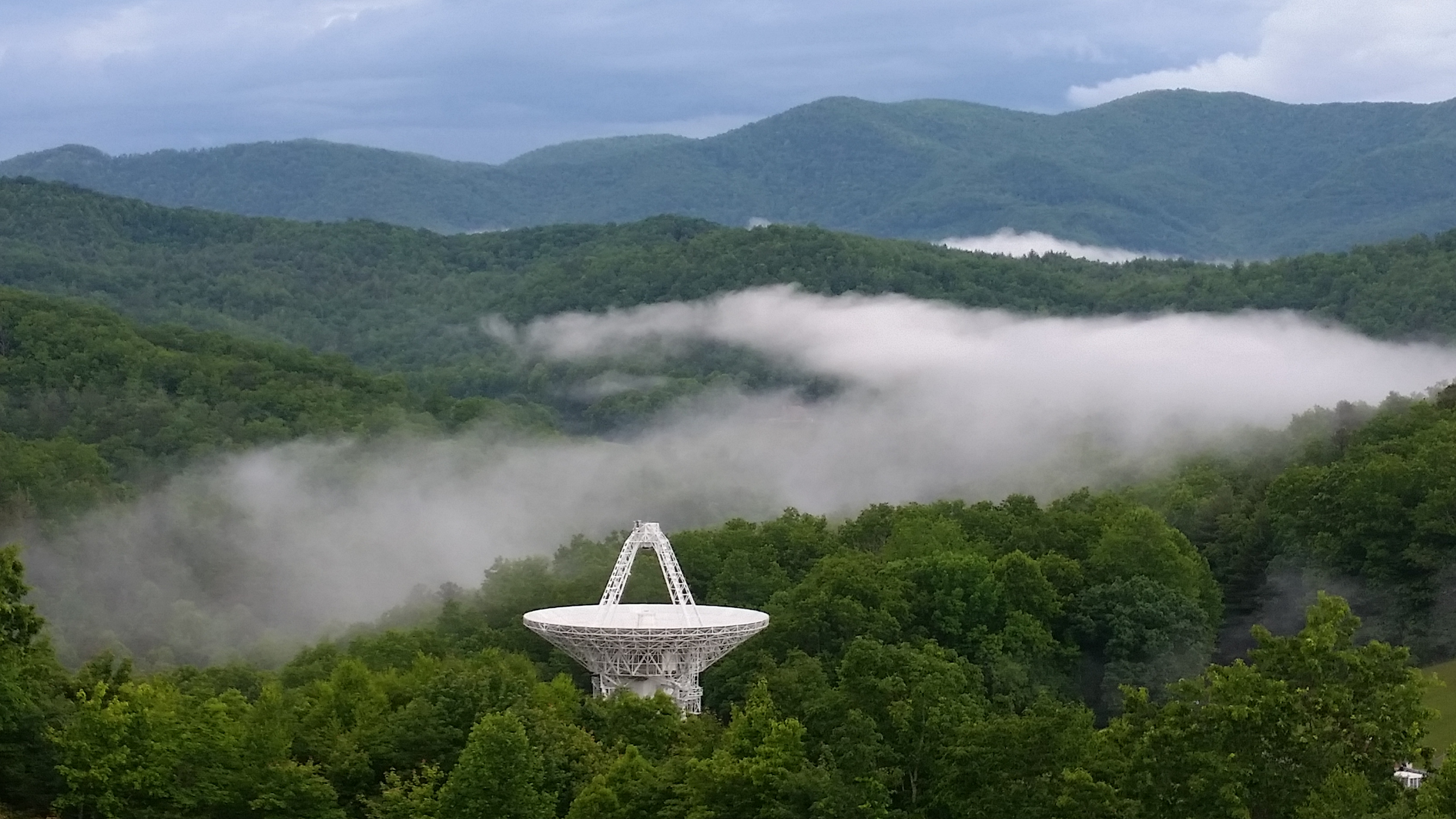
PARI houses and hosts a variety of educational and research-grade radio and optical telescopes, as well as various other space and science instruments, available for use by researchers, educators, students, and industry.
Whether you're an intern doing your first project in satellite communications, a summer camper learning radio astronomy, or a company tracking your newly launched spacecraft, PARI is ready.
Take a look in this video! Size refers to the diameter of the of the dish portion of the instrument.
These large instruments are called by many names: radio telescopes, satellite dishes, radio dishes, radio antennas, and communication towers, to name a few.
They can be used to study regions of space, or track and communicate with satellites and other spacecraft, depending on how they are being used.
When used as telescopes, they reveal things that large and cold. Hotter things in space give off mostly visible light, so we can see them with an optical, or visible light telescope. But, radio light is given off by some of the coldest things in the universe. These radio dishes are ideal for detecting large clouds of cold gas and cold dust.
They can also detect composition of certain types of objects in space, as well as their temperature and movement. Spiral arms of galaxies, nebulae, super-nova remnants, and sparse gas in the interstellar medium are all good targets. They can be used for some things that aren't cold as well, like pulsars, quasars, and and even some objects in our own solar system.
When used for communications and tracking, these instruments can measure the position and movement of satellites and other spacecraft and receive the data they send back to Earth. With the right preparation and permitting, they can be used to send messages back to spacecraft as well.
They have been used to down-link data from satellites that study Earth and the Sun, and from space telescopes looking far beyond our solar system. They've also been used to assist with launches and missions, and monitor the status of spacecraft and signals from transponders.
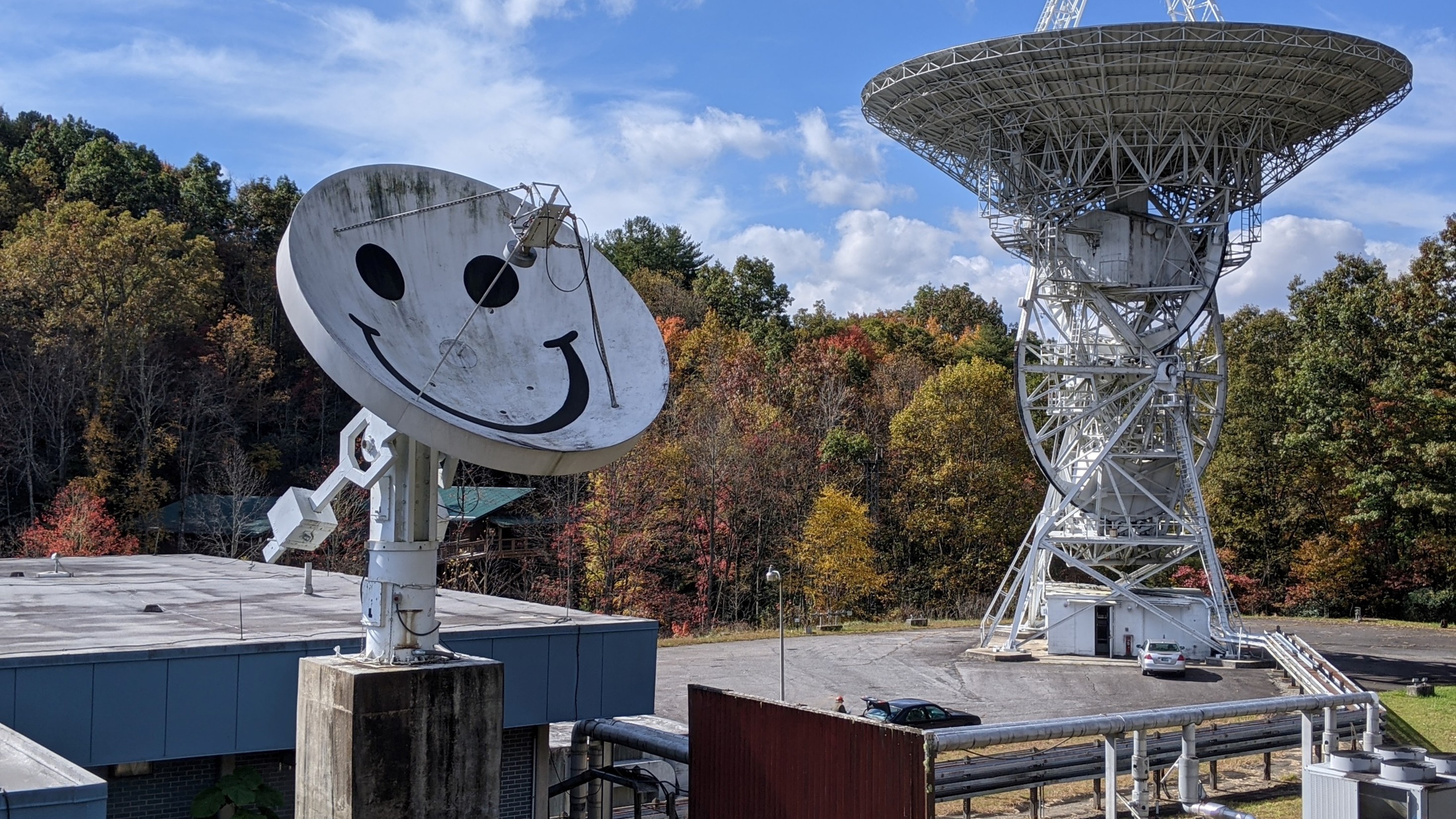
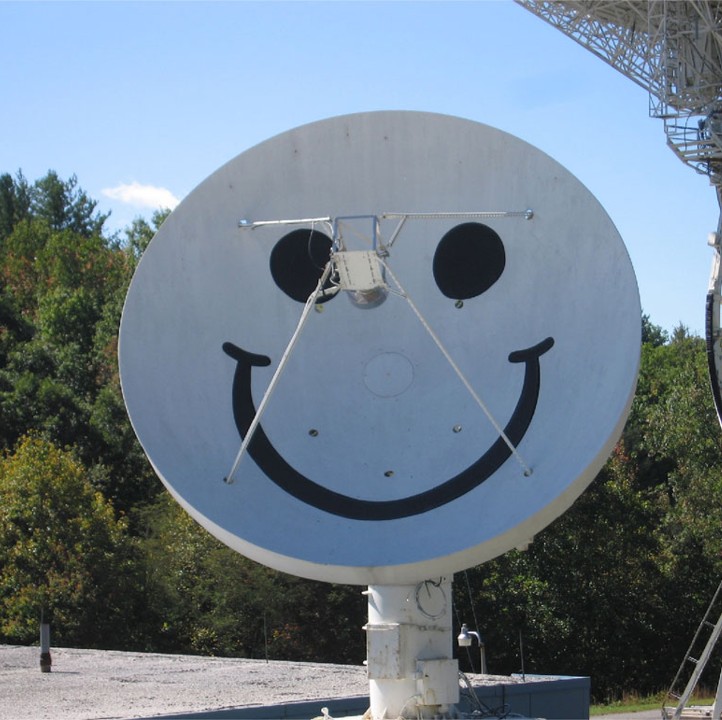
Smiley is a radio instrument with a 4.6 meter, or 15 foot, diameter dish. It was one of the first radio telescopes to be accessibly remotely for use in classrooms around the world. Smiley is still used today to introduce students to radio astronomy hands-on, with research labs written align with science curricula standards.
The antenna is currently configured for 21 cm (1.42 GHz) neutral hydrogen. Using Smiley to collect data at this frequency, several online labs allow students to map radio sources, study the Doppler Effect, detect radio waves and even measure the rotational speed of our galaxy, the Milky Way! This hands-on approach to learning has proven to be highly effective and popular among middle and high school students. Smiley has also been a useful tool for demonstrating remote control and interface software to college students.
Fun Fact
Smiley's face was painted as a joke aimed at the Soviet Union who was intensely
interested in the site while it was a Department of Defense base and often sent
satellites to photograph the campus. Each Soviet photo contained a "smiley face"
looking up at the sky as a friendly wave!
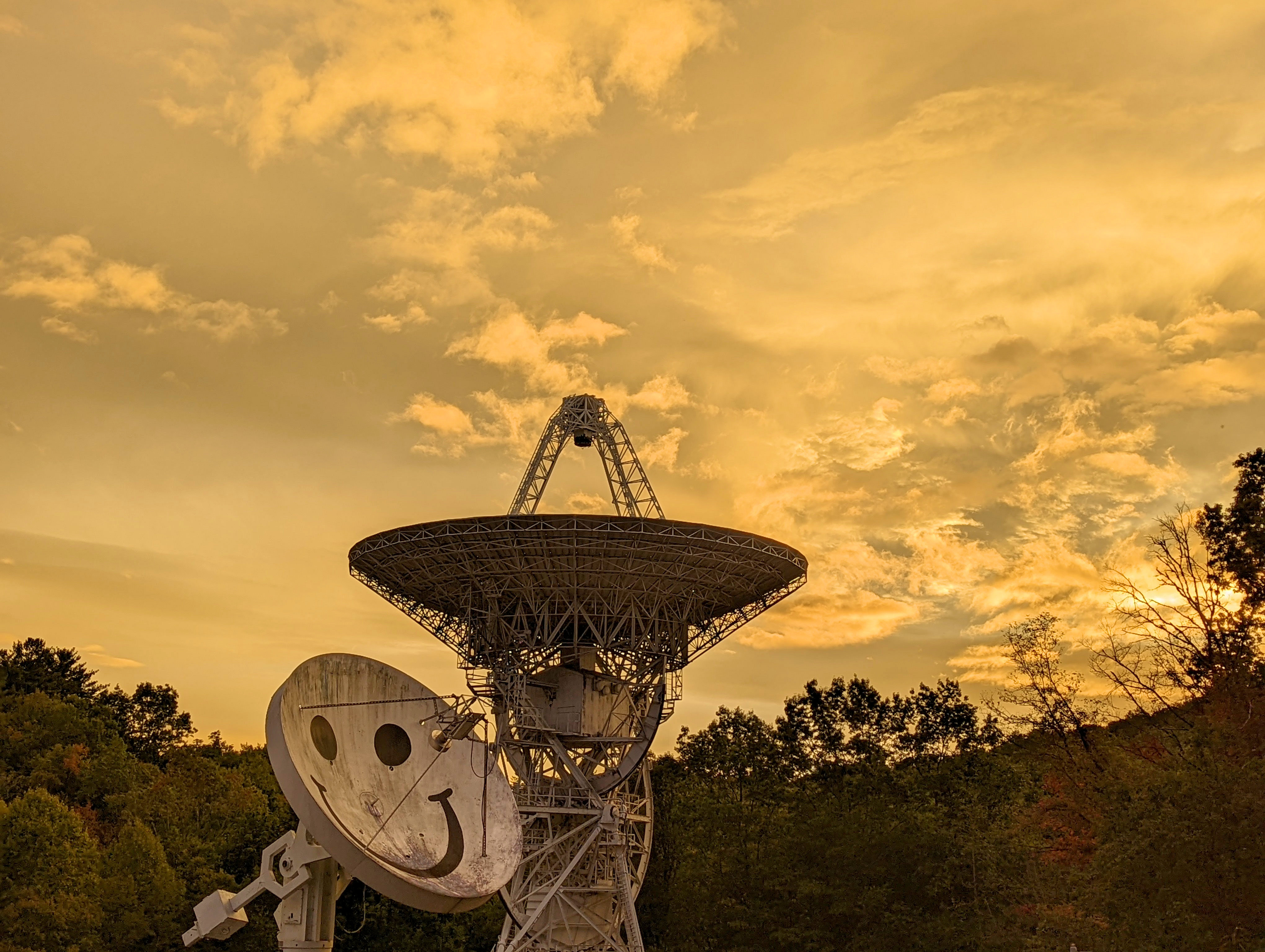
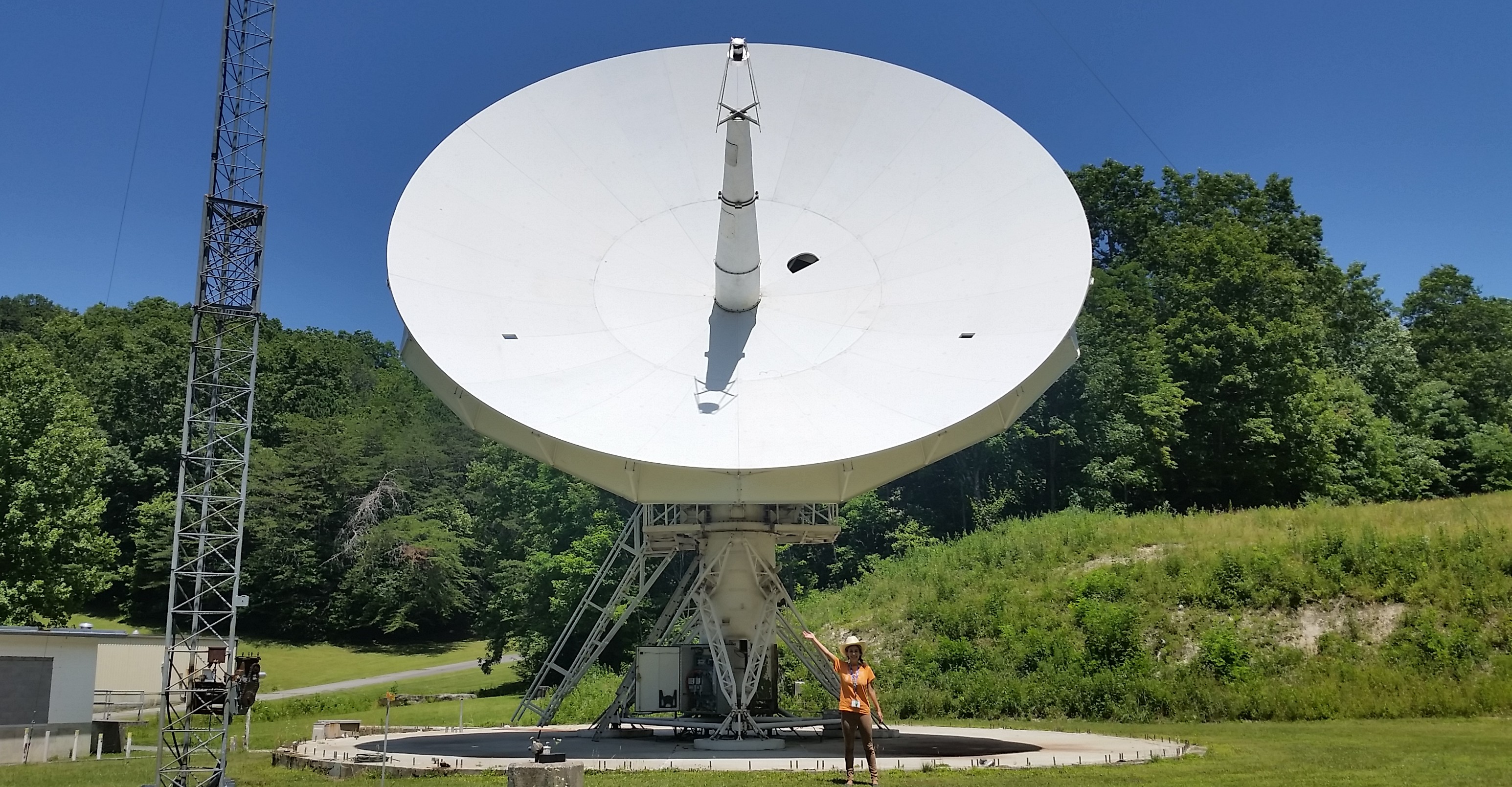
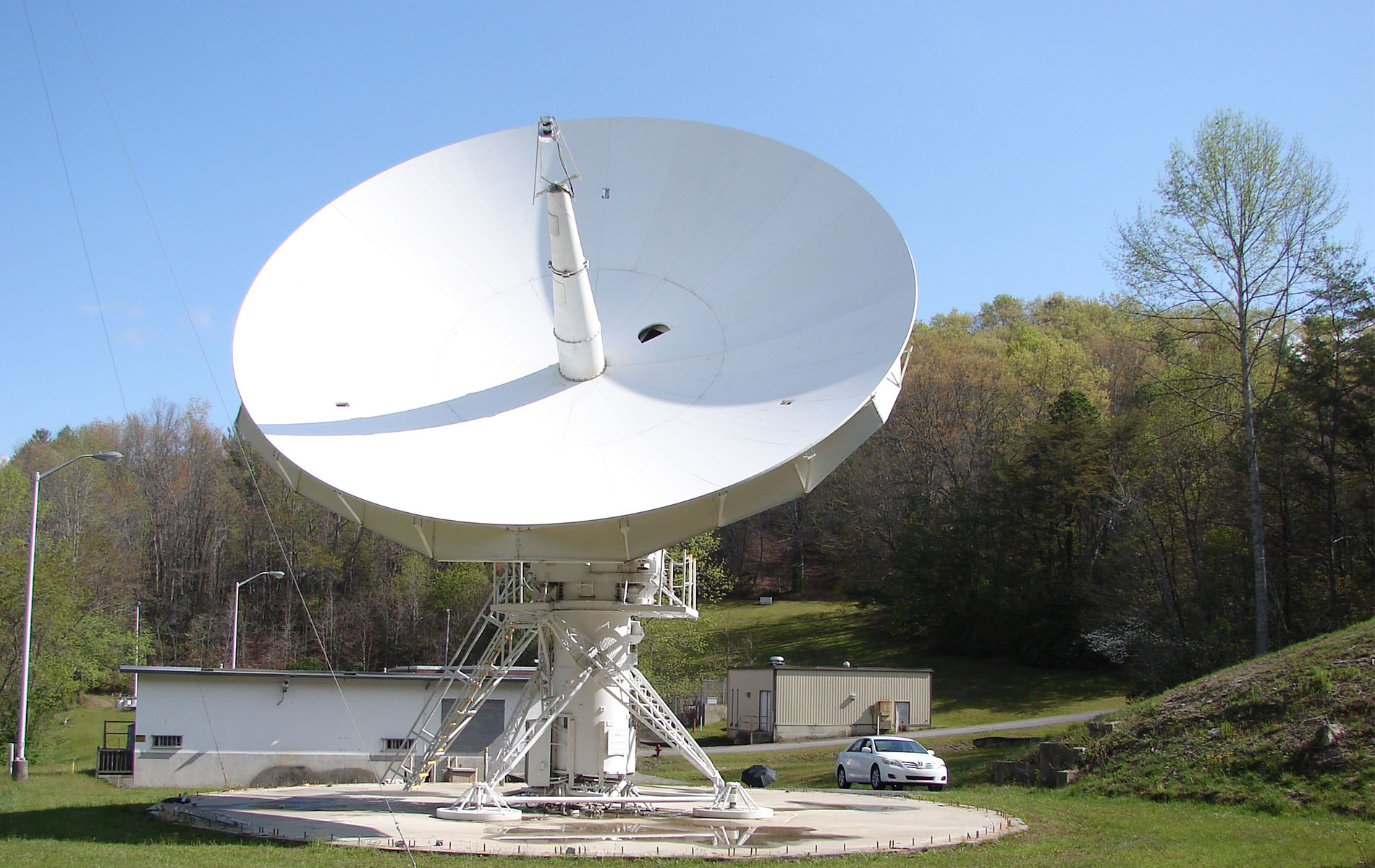
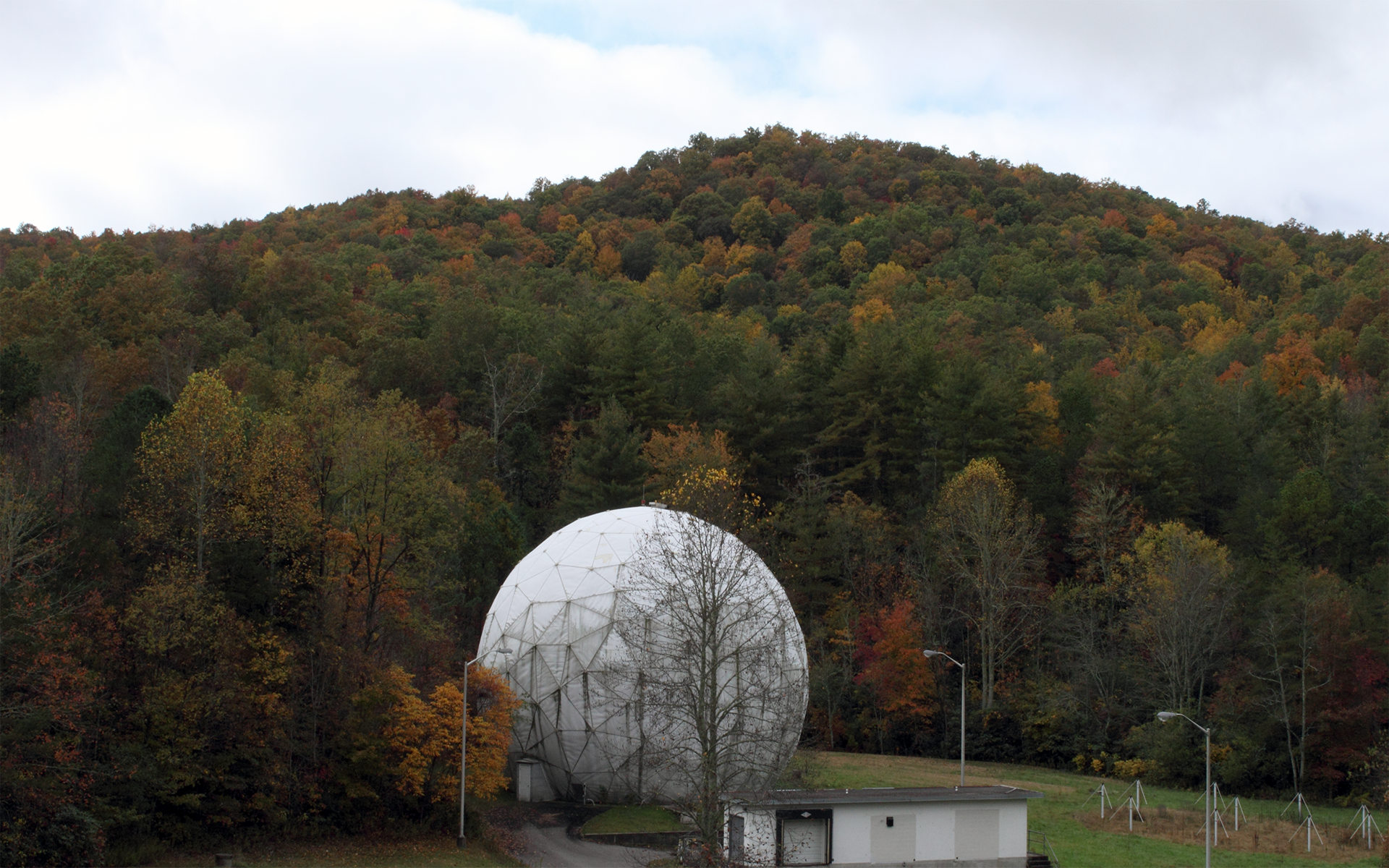
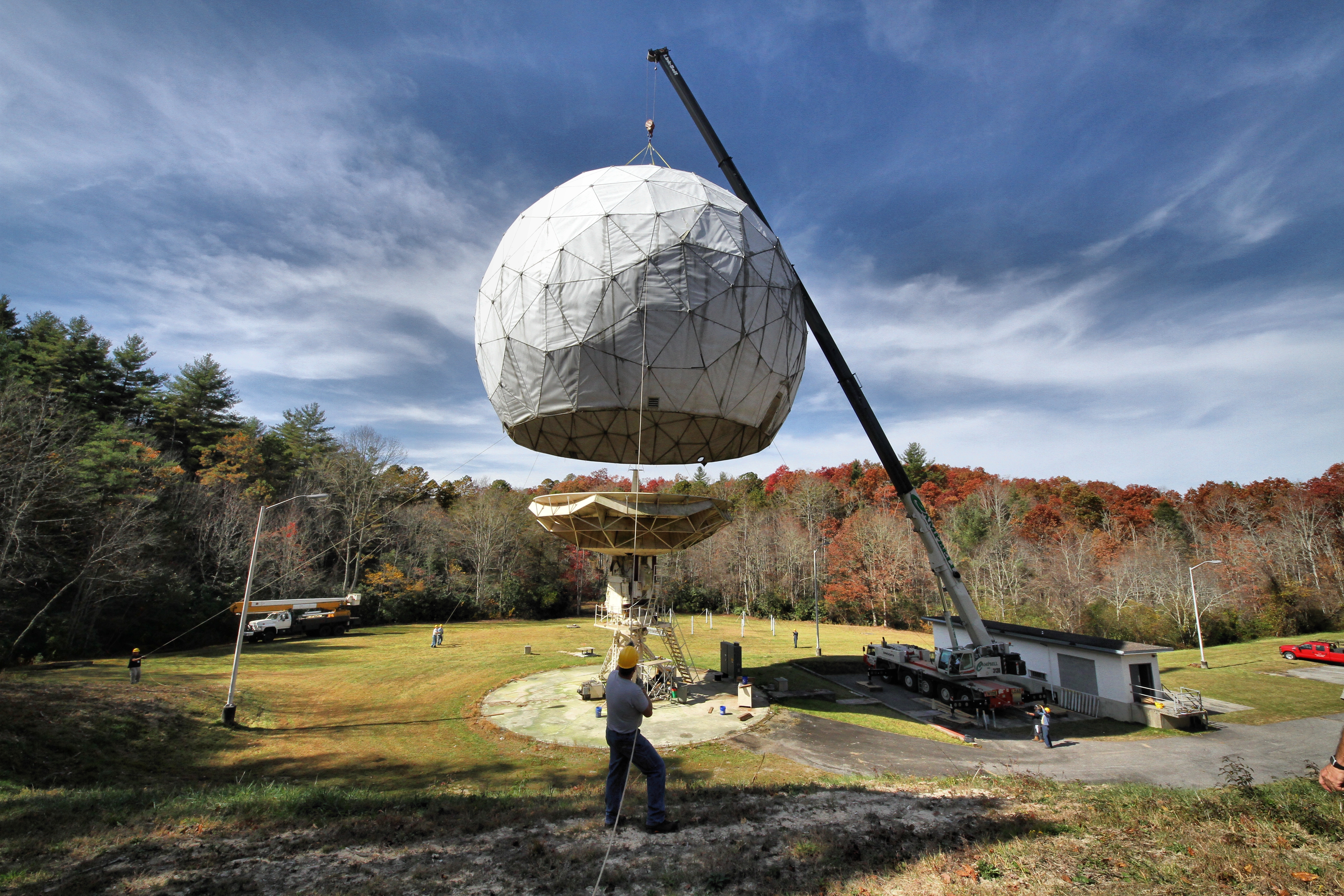
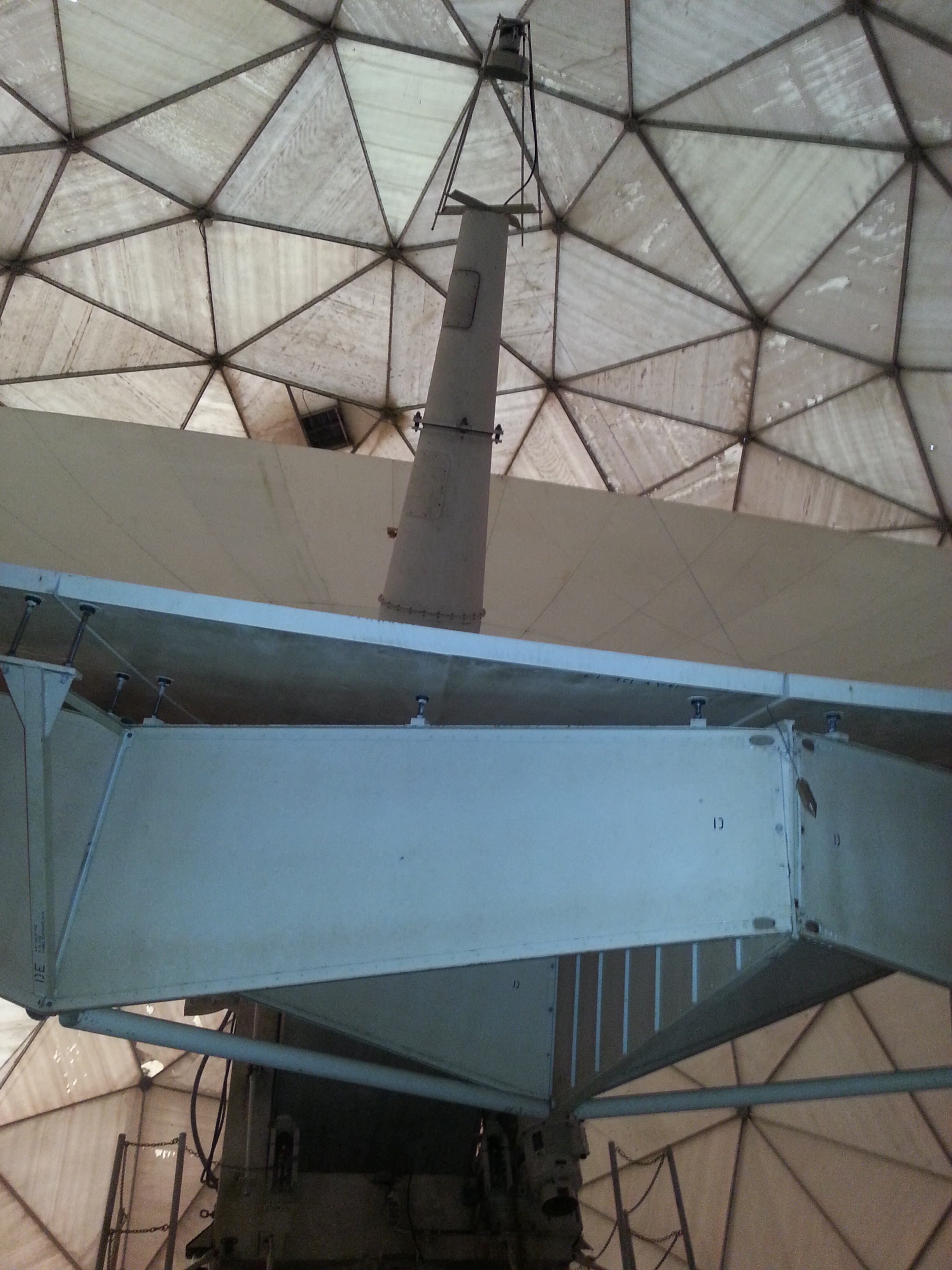
The 12 Meter (40 foot) radio instrument is in the souther portion of our campus. When PARI moved on to the site, this dish had a dome over it. It was installed while the site was being used by the Department of Defense, and domes served primarily to hide where the dish was pointed so people viewing it from the ground, or from high above, could not see where it was aimed. PARI removed the dome to increase the sensitivity of the dish to certain types of signals.
Like Smiley, the 12 Meter has a 21 cm (1.42 GHz) neutral hydrogen feed in place. It is also used primarily for education purposes. Currently it us undergoing upgrades and is expected to join UNC's Skynet robotic telescope network to bring it to wider audiences.
Fun Fact
The 12 Meter was built by Hughes Aircraft, and was designed to be able to be
folded up, towed away by a truck, and transported via aircraft to new sites.
It was made to be highly portable and rapidly deployable!
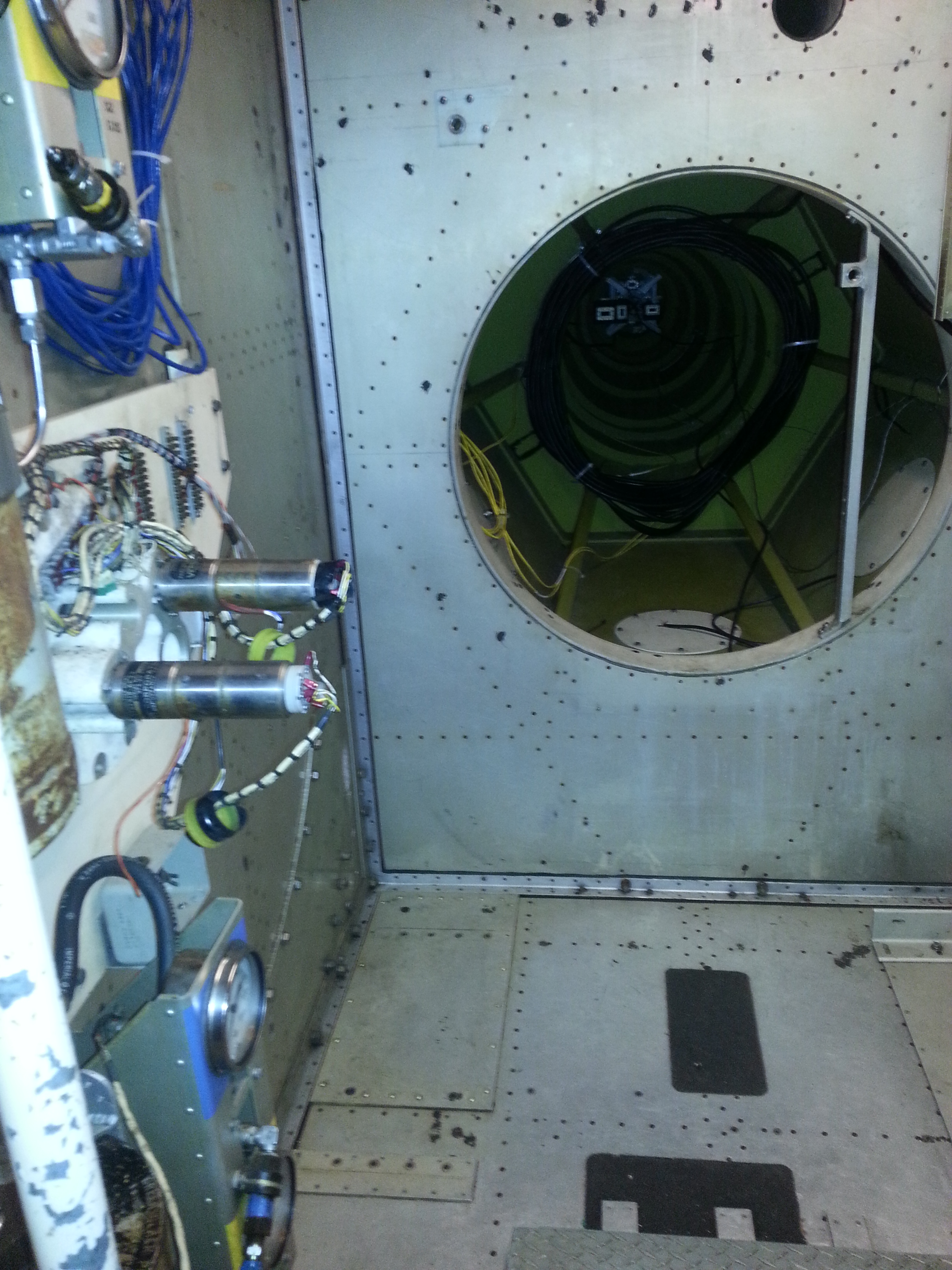
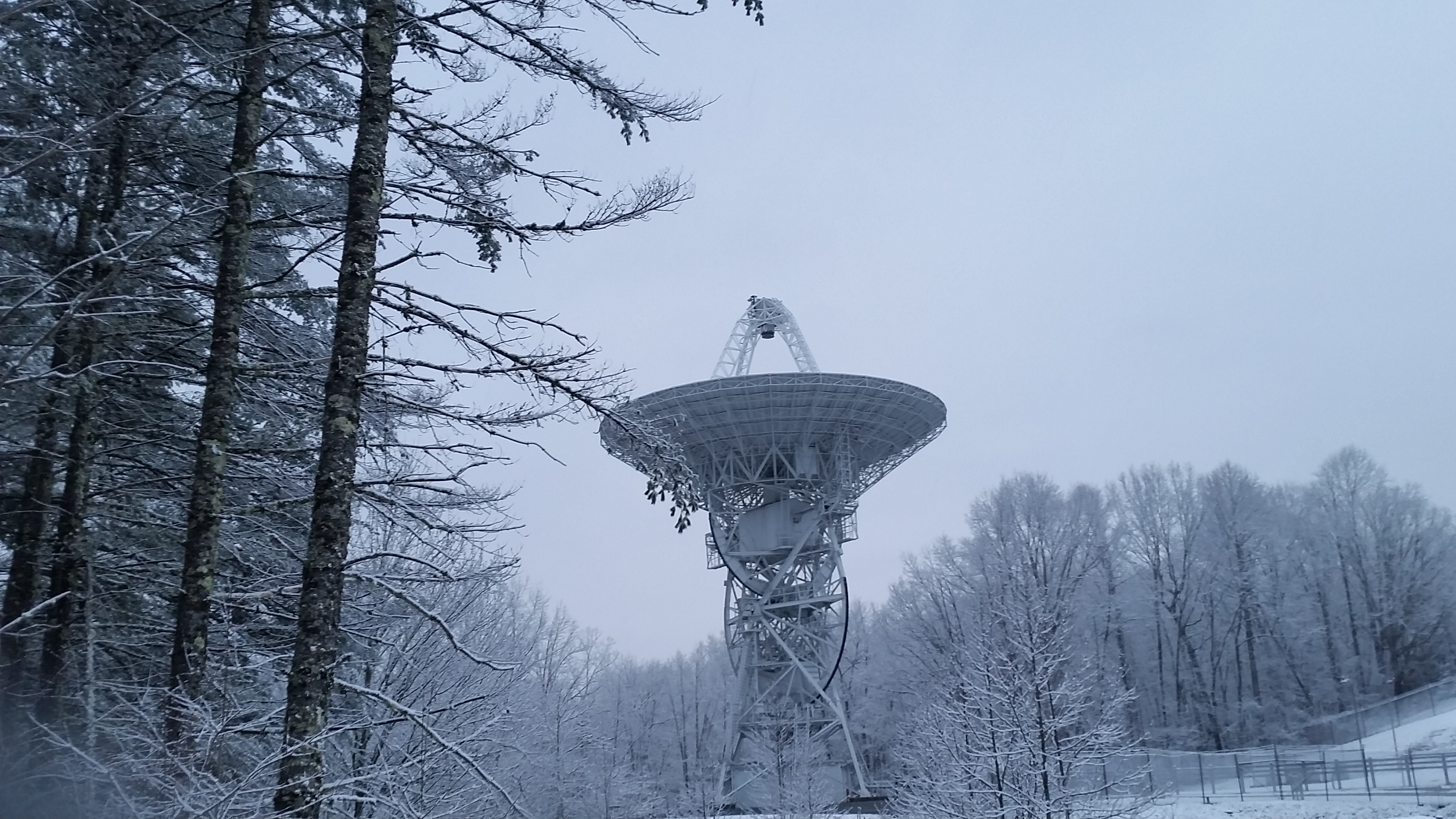
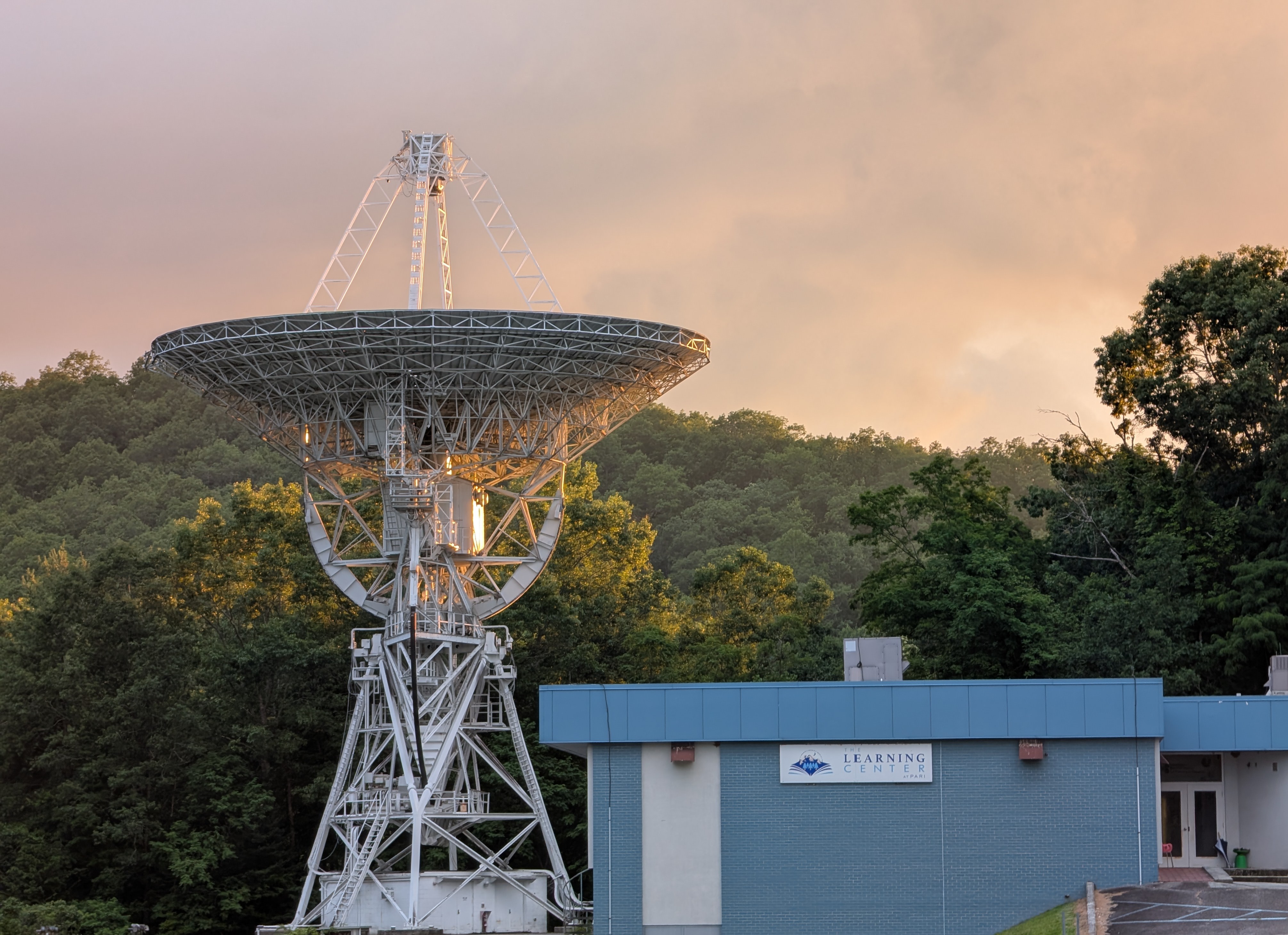
This is one of the pair of 26 meter (85 foot) diameter dishes at PARI. This one is on the east side of campus, and was built first. It was originally part of NASA's STADAN network and provided tracking and data acquisition for early satellite missions.
Today it can be used for either radio astronomy observations or spacecraft tracking and communication. It currently has the ability to receive X band, S band, and L band radio frequencies. It can move at up to 3° per second across the sky and as slow as 15° per second for astronomical tracking.
Find out how to use this dish for spacecraft & satellite tracking and communications to support your missions.
Fun Fact
26 East was designed by the Rohr Aircraft company. It is the lighter of the two 26
meter dishes and has six legs.
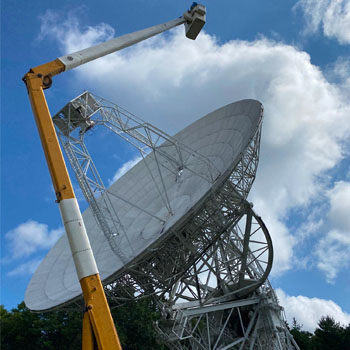
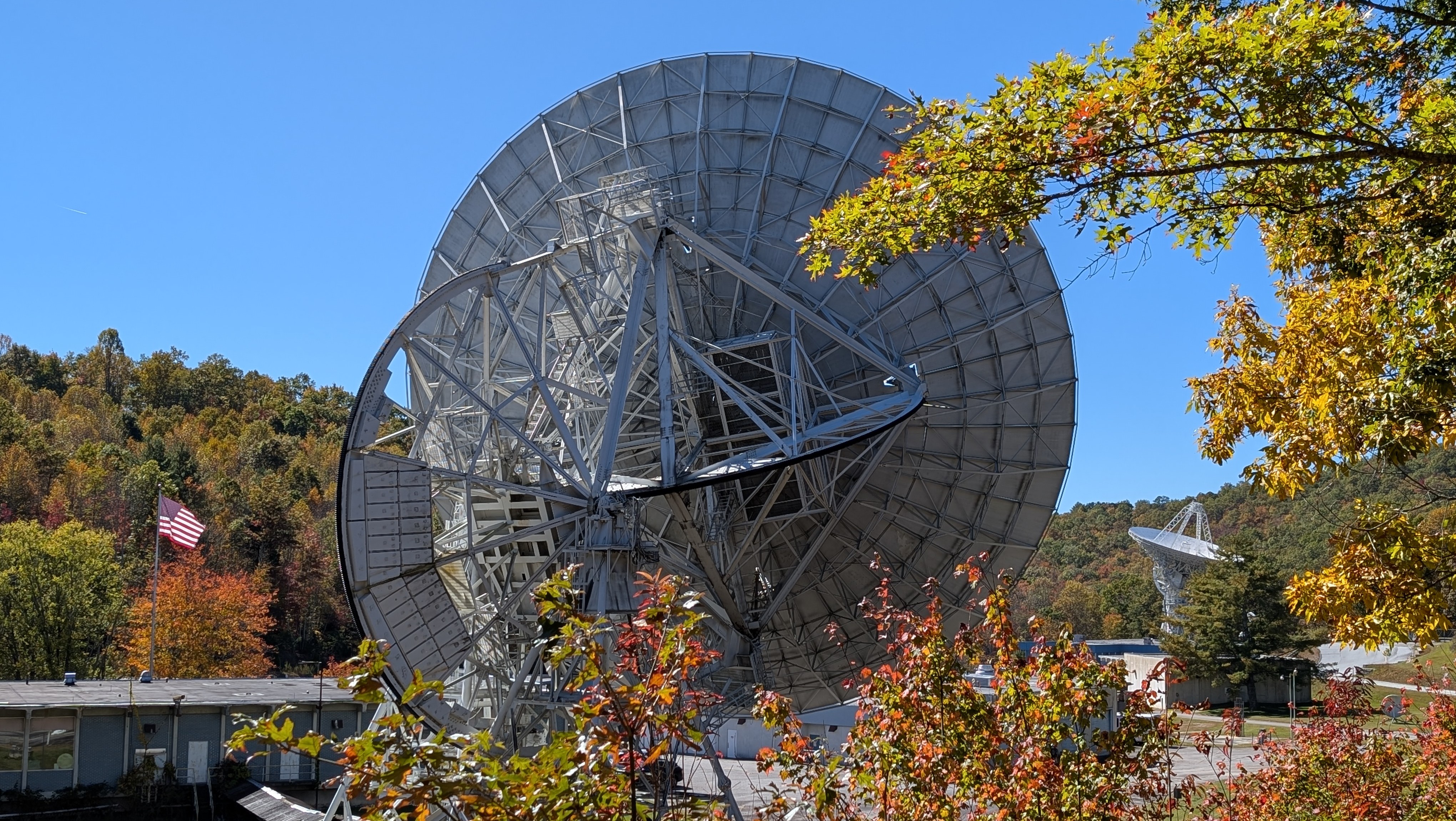
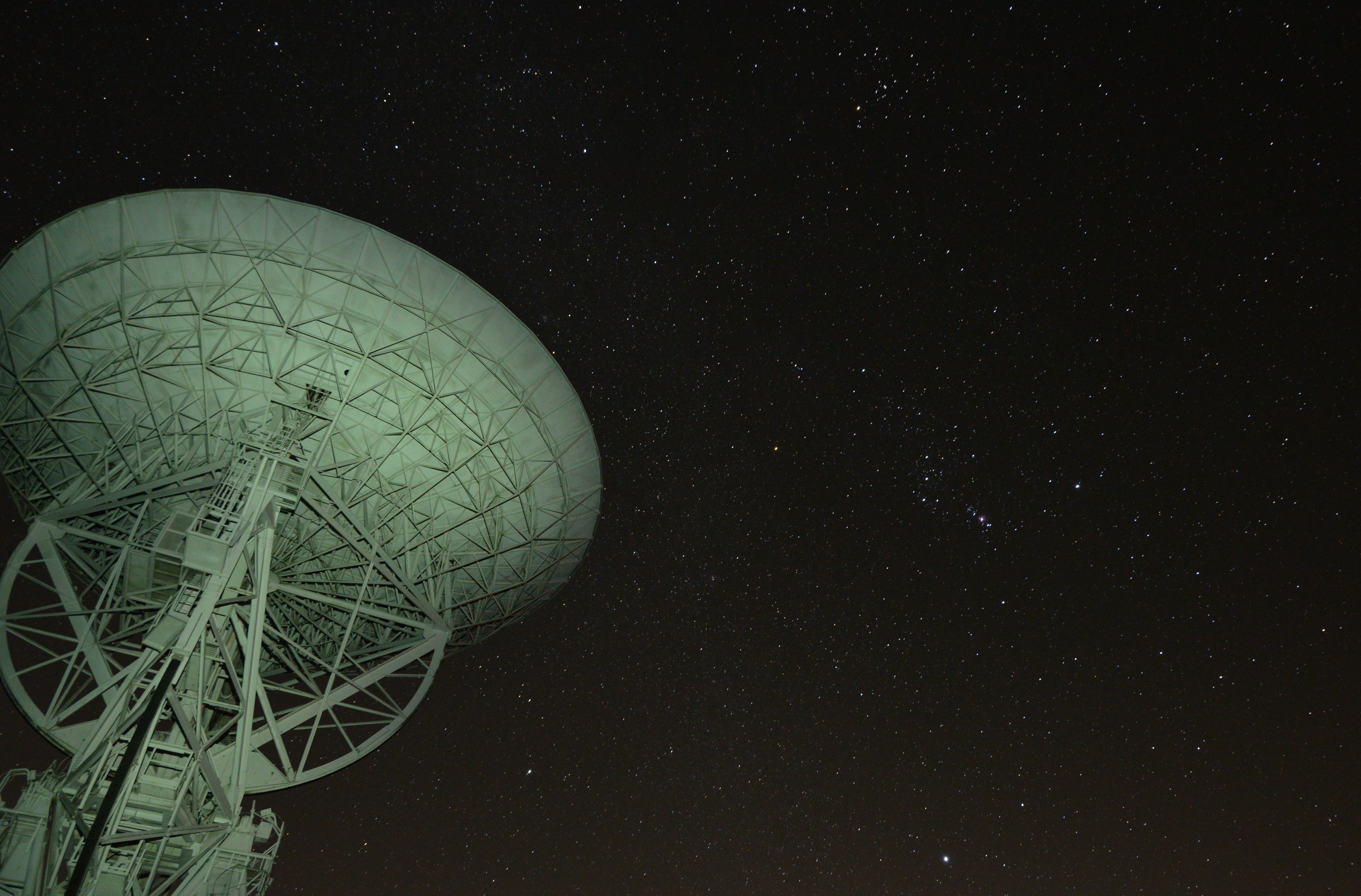
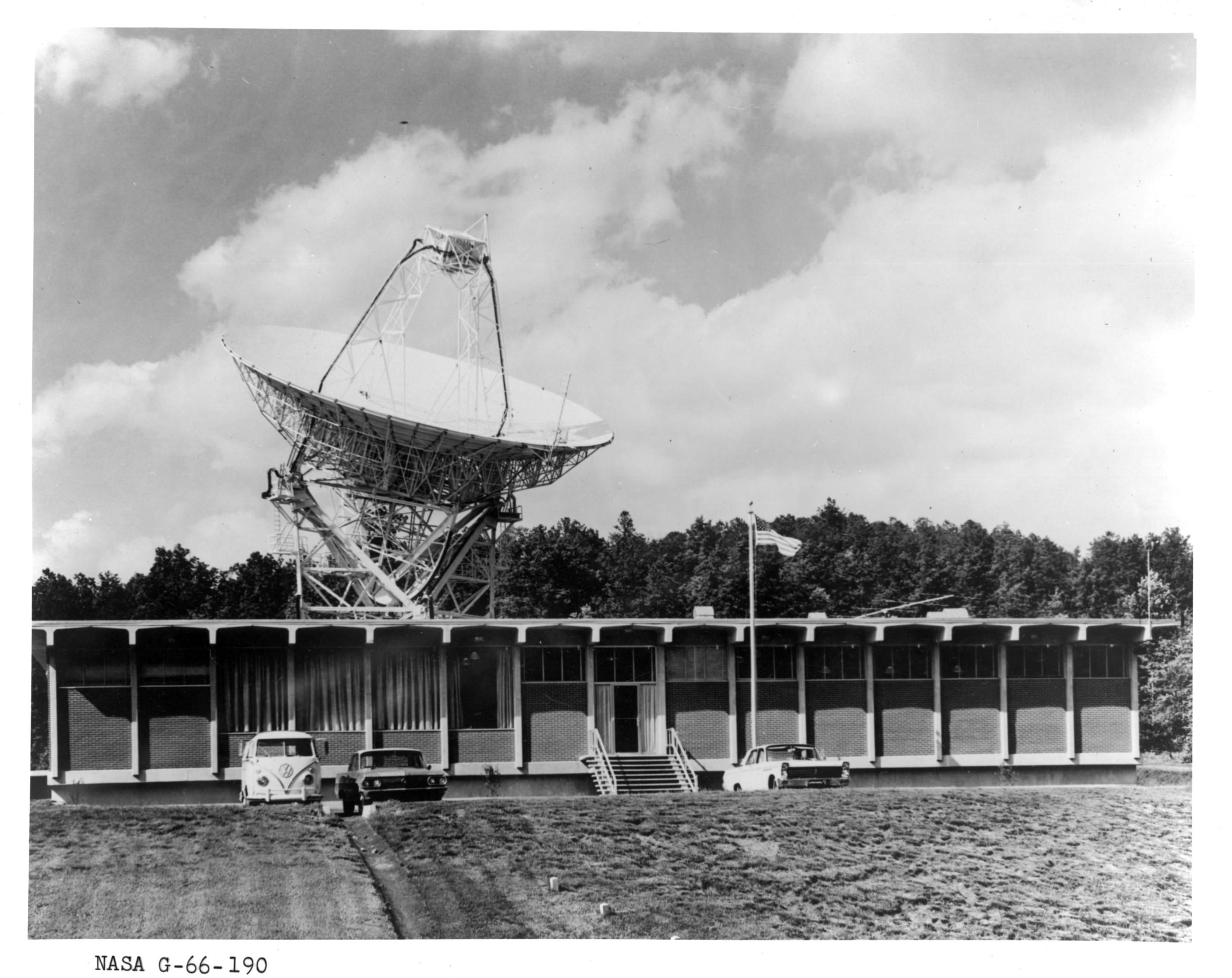

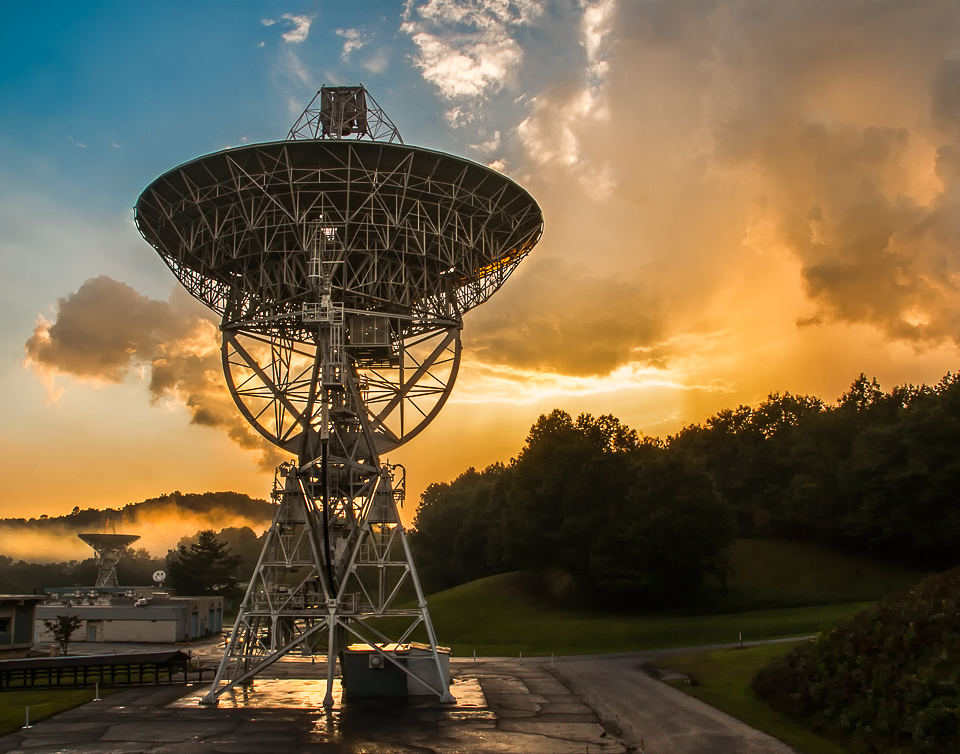
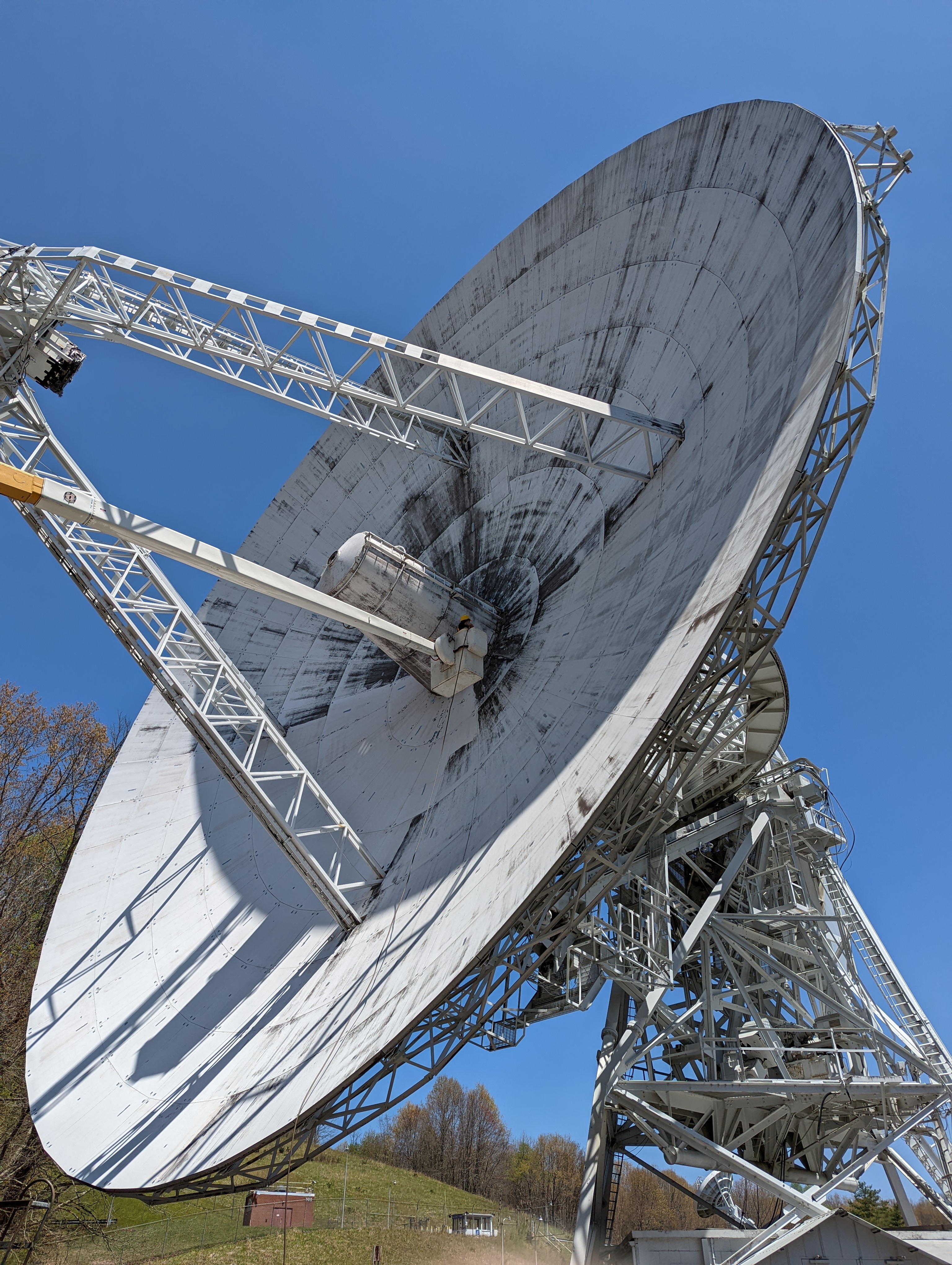
This is the second of the pair of 26 meter (85 foot) diameter dishes at PARI. It is on the west side of campus, and was built second. It was originally built to be support NASA's ATS (Applications Technology Satellite) missions and designed to transmit and receive simultaneously by using a cassegrain sub-reflector that was transparent to one set of frequencies, and reflective to the other.
Like 26 East, is now be used for either radio astronomy observations or spacecraft tracking and communication. It currently has the ability to receive X band and S band radio frequencies. It can move at up to 3° per second across the sky and as slow as 15° per second for astronomical tracking.
Find out how to use this dish for spacecraft & satellite tracking and communications to support your missions.
Fun Fact
26 West was designed by Blaw-Knox, a company that primary made radio towers at the
time. It is the heavier of the two 26 meter dishes and has four legs and a little
house at the top under the dish portion which was used for transmitting equipment.
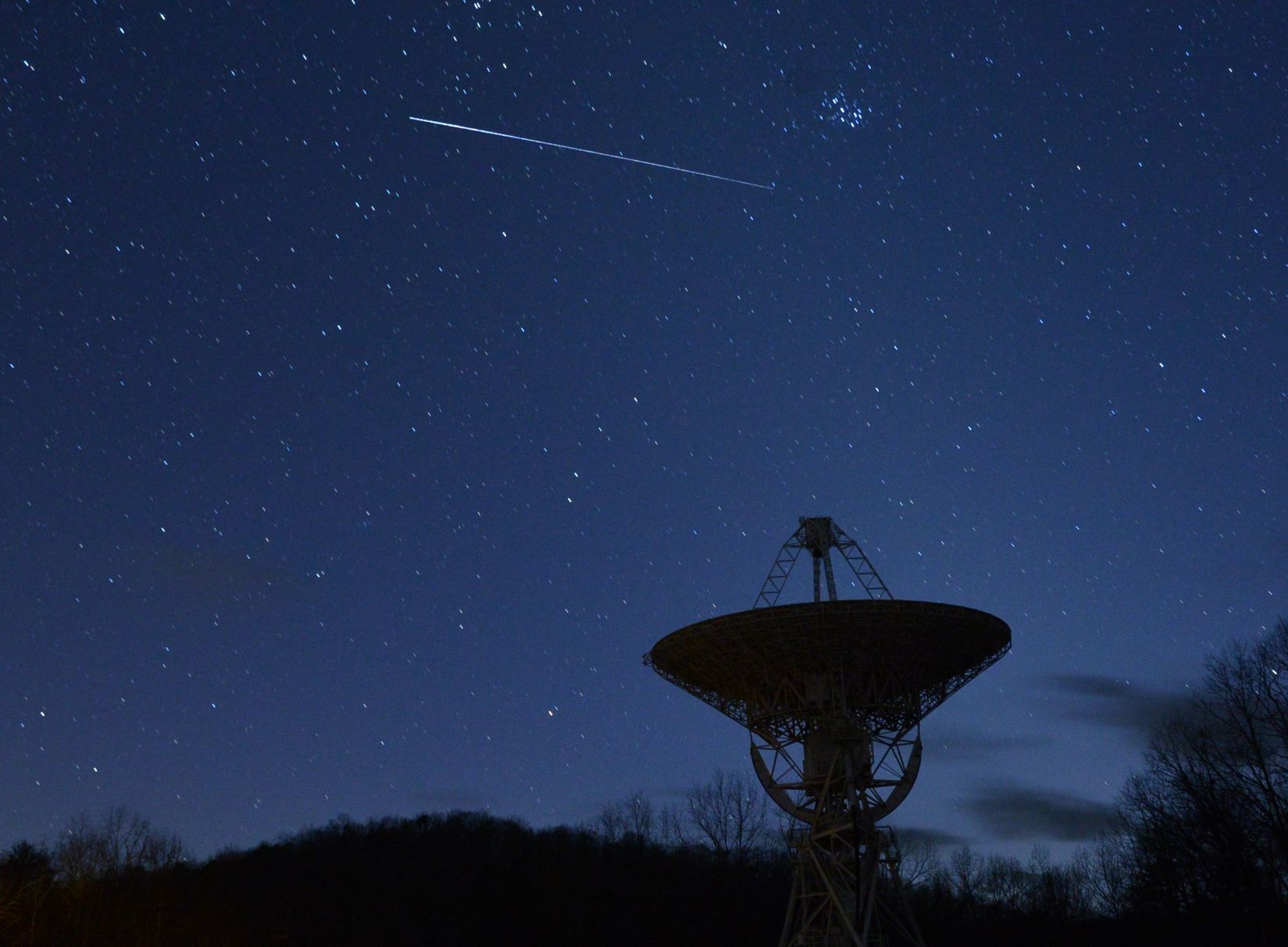
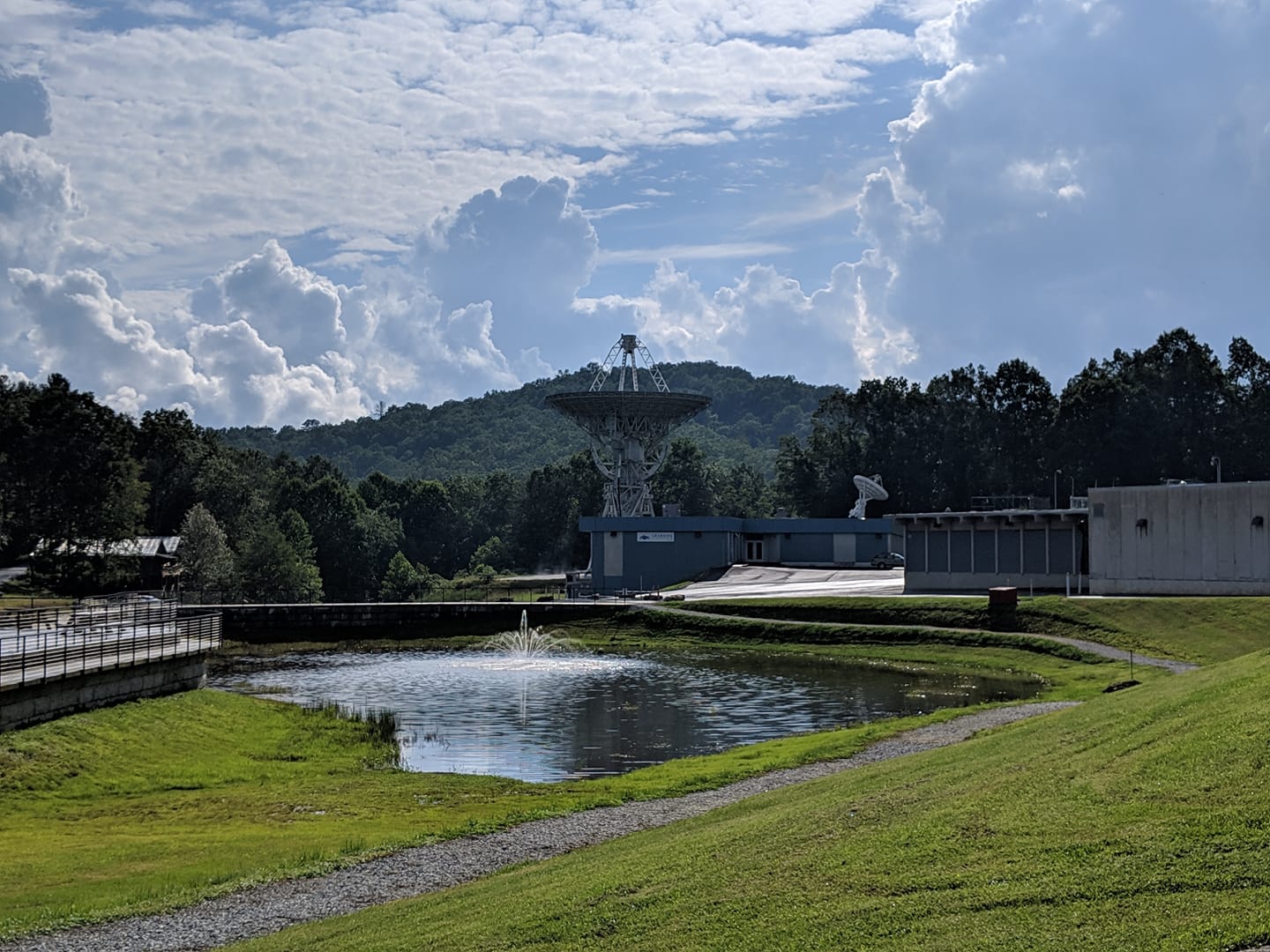
Our research grade 0.4M Classical Cassegrain F/8. The 76mm flat field is fully shielded and unvignetted.
Finderscope: Questar 7″, F/13 with a 2″ flat field of view telescope.
Both telescopes have a 1/2 degree field of view.
This telescope is currently waiting maintenance and refurbishment and is not currently available for use.
PARI hosts an assortment of optical telescopes for use during public programs, education, and outreach. During evening events and overnight programs like summer camps, these telescopes help us share the night sky with guests. They are maintained by our dedicated volunteers and through partnerships with local astronomy clubs.
The outreach and education telescopes most commonly used range in size from 8 inches to 25 inches and include reflector and refractor types. Most have manually controlled mounts.
Also used for education and outreach are several solar telescopes. Two of these have been modified with solar filters from standard optical telescopes, and one is an H-Alpha solar telescopes.
Visiting researchers, interns, and other PARI site users can take advantage of an assortment of workspaces to suit their needs while here.
From single offices, conference rooms, and classrooms to electronic and radio lab space and equipment racks, we'll help you find a spot to accomplish your goals while here to use our equipment or set up your own.
PARI reserves copyright on all content on this site except where otherwise noted. © 2026 Pisgah Astronomical Research Institute